Tina Butler · 27 September 2026
Acoustic Monitoring Identifies Biodiversity Hotspots in Hollowoak Woods
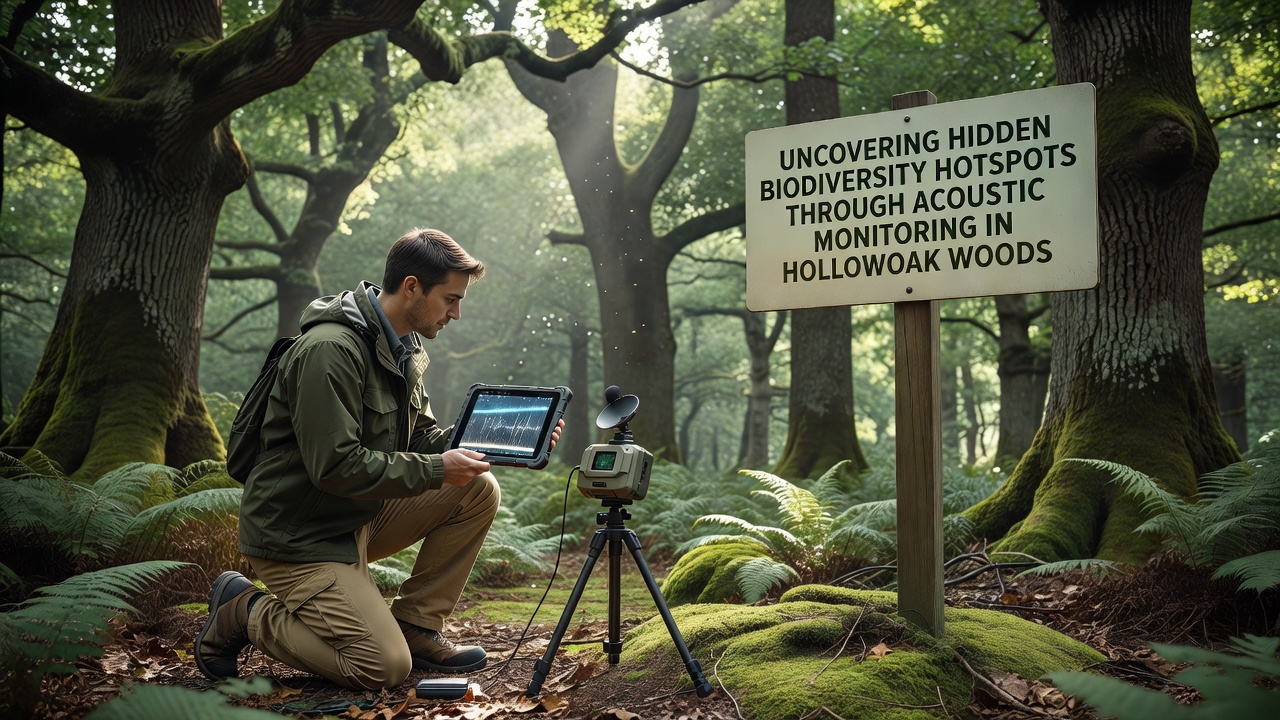
Researchers have deployed networks of acoustic sensors across Hollowoak Woods to map areas rich in species diversity that remain difficult to document through traditional visual surveys alone. These devices record vocalizations from birds, amphibians, insects and mammals over extended periods, allowing analysts to identify patterns in species presence and activity levels. Data collection began in early 2025 and continues to expand, with a major phase scheduled for September 2026 that will incorporate additional recording units in previously unsampled zones.
How Acoustic Methods Work in Practice
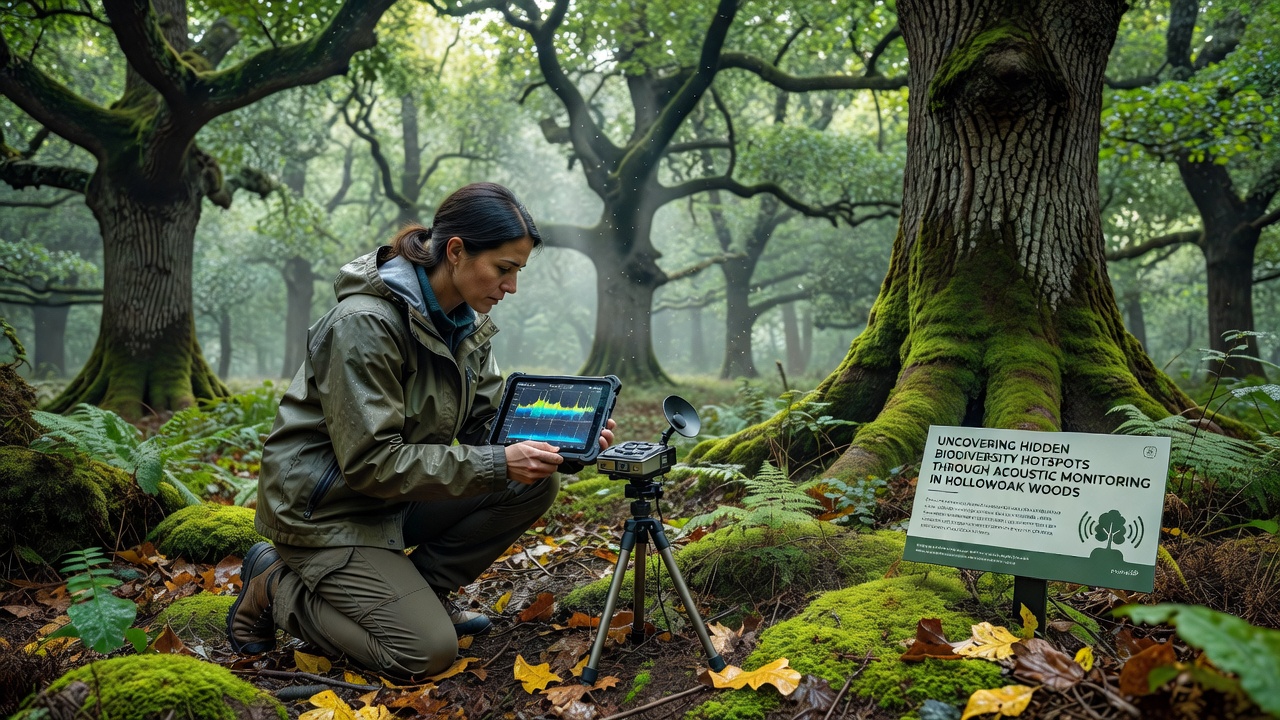
Teams position waterproof microphones on trees and posts at intervals of roughly 200 meters, then program them to capture 10-minute samples every hour around the clock. Software processes the resulting audio files by matching sound signatures against reference libraries, and analysts verify automated detections through manual review of spectrograms. This approach covers larger areas than point counts or transects while reducing disturbance to wildlife, since observers stay away from the equipment during operation. One study revealed that acoustic coverage detected 28 percent more species than simultaneous visual surveys conducted in the same locations.
Key Findings From Recent Deployments
Recordings from 2025 identified several clusters where multiple species overlapped in both space and time, particularly near seepage areas and old-growth stands. Species such as the wood thrush and northern flying squirrel appeared more consistently in these zones than in surrounding forest, while insect choruses peaked in late summer evenings. Observers note that the data also captured rare events including the first confirmed vocalizations of a local bat population in over a decade. Figures from the project show that three distinct hotspots together account for nearly half of all detected species occurrences despite covering only 18 percent of the total monitored area.
Integration With Other Monitoring Approaches
Project coordinators combine acoustic results with existing vegetation maps and soil moisture readings to refine hotspot boundaries, and they plan to add camera traps at select locations starting in 2027. This layered strategy helps confirm whether sound-based detections correspond to actual population densities rather than transient individuals. Data shows strong correlations between high vocal activity and structural complexity of the canopy, while areas with uniform young growth produced fewer unique signatures. Those who've studied this know that cross-referencing multiple data streams reduces false positives and provides stronger evidence for conservation priorities.
Broader Applications and Next Steps
Similar acoustic programs operate in other regions, and findings from Hollowoak Woods align with patterns reported by the U.S. Forest Service in comparable eastern hardwood forests. The September 2026 expansion will add sensors along elevation gradients and near the outer edges of the woods to test whether hotspots shift seasonally. Analysts expect the enlarged dataset to support predictive models that forecast how changes in temperature or precipitation might affect species distributions. Training workshops scheduled for local volunteers will focus on basic spectrogram interpretation so community members can assist with verification tasks.
Conclusion
Acoustic monitoring continues to supply detailed records of biodiversity that complement existing surveys in Hollowoak Woods, and the upcoming phase in September 2026 will extend coverage into new sections. The resulting maps help managers allocate resources toward areas supporting the greatest variety of vocal species while minimizing impacts on sensitive locations. Ongoing analysis of archived recordings may reveal additional trends as reference libraries improve and processing tools advance.