Tina Butler · 2 September 2026
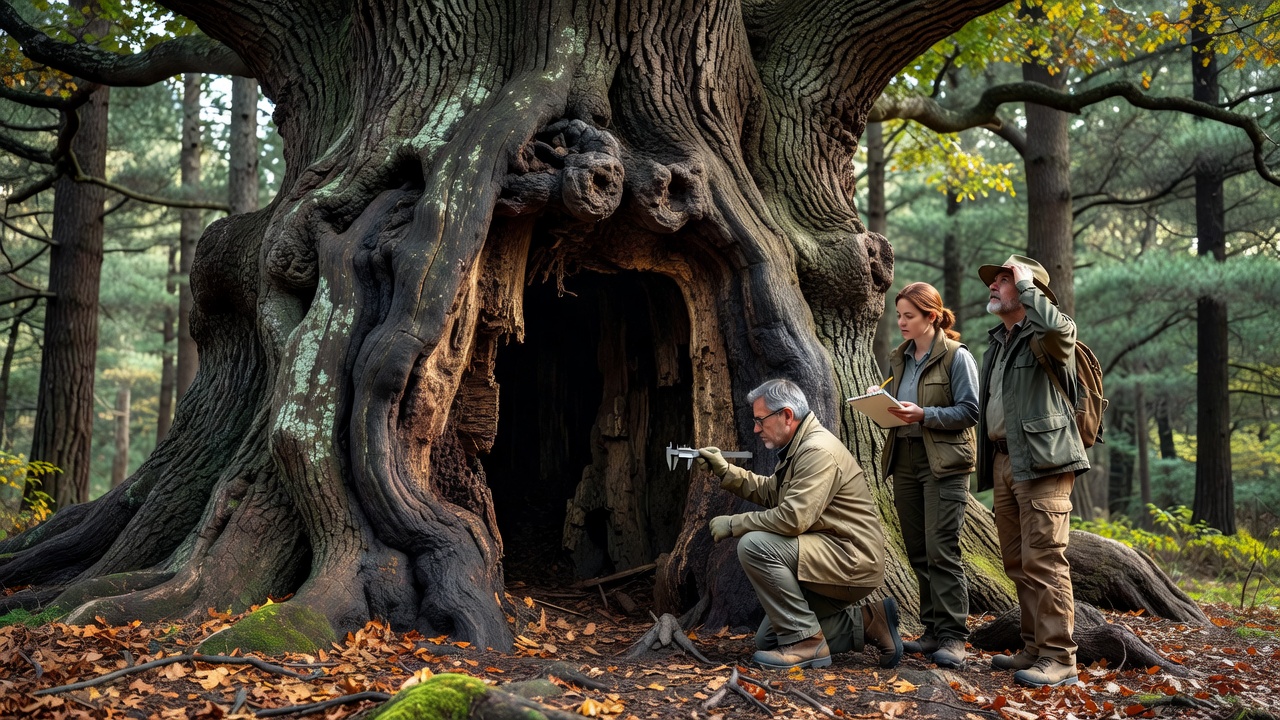
Botanists from the Regional Botanical Research Center have confirmed that the prominent Hollow Oak tree within the Hollow Oak Heritage preserve is more than 400 years old. The verification follows a two-year study employing multiple scientific methods to establish the tree's precise age with high accuracy. This ancient specimen stands over 25 meters tall with a trunk diameter exceeding 2.4 meters, serving as a focal point for ecological research and heritage conservation efforts in the area.
Research Methods and Findings
Scientists utilized dendrochronology by extracting small core samples from the trunk to count annual growth rings, revealing more than 420 distinct rings indicating the tree originated around 1600. Non-destructive techniques such as sonic tomography assessed internal structure without harm, while soil core analysis and historical climate data cross-referenced growth patterns against known environmental events like droughts in the 1700s. Carbon isotope testing on bark samples further validated the timeline. The tree's slow growth rate and resilient root system have enabled survival through centuries of regional changes, distinguishing it from younger specimens nearby. Researchers noted minimal signs of disease, attributing longevity to genetic factors and stable microclimate conditions at the site.
Historical Significance
The confirmed age enhances the Hollow Oak's status as a living historical marker potentially witnessed by early inhabitants and settlers. Preservation measures now include restricted access zones and monitoring for invasive species to safeguard its future. Educational initiatives at the heritage site will incorporate these findings to highlight biodiversity and long-term ecological stewardship. Ongoing surveys aim to identify additional old-growth trees, promoting broader conservation awareness. This discovery reinforces the value of protecting ancient natural landmarks amid contemporary environmental pressures, ensuring the Hollow Oak remains a vital part of the region's heritage for generations ahead.