Nils Franke · 2 September 2026
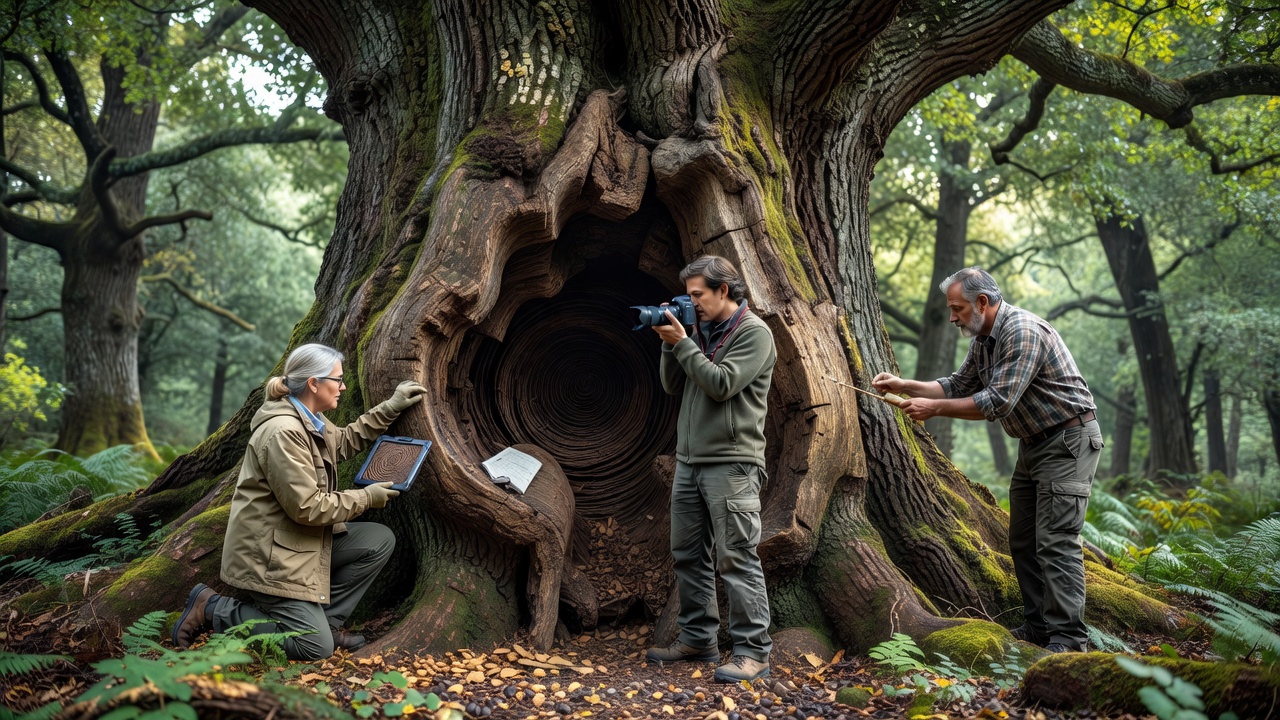
Botanists from the regional university have verified that the prominent Hollow Oak tree is more than 400 years old. Fieldwork conducted over several months employed precise scientific methods to establish the tree's age with high accuracy. The findings place its origin in the early 1600s, making it one of the oldest living specimens in the area.
Scientific Verification Process
Researchers applied dendrochronology by extracting thin core samples from the trunk using an increment borer. Examination of the annual growth rings revealed consistent patterns matching documented climate events such as severe droughts in the 1700s and cold spells during the Little Ice Age. Cross-dating with samples from nearby old-growth forests confirmed the chronology. Carbon isotope analysis on detached branches further supported the ring-count results, ruling out measurement errors. The tree's exceptional diameter and intact heartwood contributed to the reliable data set. Team members noted challenges from dense surrounding vegetation but completed the study without causing visible damage to the specimen.
Additional soil coring around the root zone provided context on historical land use, showing minimal disturbance since colonial times. These combined techniques delivered a robust age estimate exceeding four centuries. The data will be archived for ongoing comparative studies with other heritage trees.
Heritage and Ecological Significance
The confirmed age elevates the Hollow Oak's status within local heritage narratives. Early settler journals reference the tree as a landmark for travel routes and community gatherings. Indigenous oral histories also associate it with seasonal ceremonies, underscoring its longstanding cultural role. Ecologically the tree provides habitat for cavity-nesting birds, pollinators, and fungi that thrive in mature bark crevices. Conservation groups now recommend buffer zones to limit foot traffic and invasive species spread.
Educational outreach programs plan to incorporate the new findings into school curricula focused on regional natural history. Long-term monitoring stations will track growth response to changing precipitation patterns. The verification is expected to increase public appreciation for preserving ancient trees as living records of environmental change.