
Nils Hansen · 13 September 2026
Pollen Analysis Sheds Light on Long-Term Environmental Changes in Hollowoak Area
Researchers have turned to pollen preserved in lake sediments and soil layers across the Hollowoak area to reconstruct vegetation patterns spanning several centuries, and this approach reveals shifts tied to climate variations along with human land use. Cores extracted from local wetlands show layers that contain pollen from oak, pine, and various herbaceous plants, allowing scientists to map how forest composition changed over time. Data from these samples indicate periods when oak dominance gave way to more open landscapes, a pattern that aligns with documented droughts and agricultural expansion in the region.
Core Sampling and Laboratory Processing
Teams collect sediment cores using specialized drilling equipment that preserves stratigraphic order, then they slice the material into thin sections for analysis in controlled lab settings. Each slice undergoes chemical treatment to isolate pollen grains, which experts identify under high-powered microscopes by comparing shapes and surface textures against reference collections. Counts of individual pollen types get converted into percentages that represent relative abundance, and these figures feed into statistical models that estimate past plant communities. Studies conducted through 2025 have refined calibration techniques that improve accuracy when matching ancient pollen to modern vegetation surveys.
Key Findings from the Hollowoak Record
Analysis of cores dating back to the 1600s shows a gradual decline in oak pollen after European settlement began, while ragweed and grass pollen percentages rose sharply in layers corresponding to the 1800s. This transition reflects clearing for farmland, a process that reduced canopy cover and favored disturbance-tolerant species. Later intervals captured in the record point to reforestation efforts in the mid-1900s, when pine pollen increased following conservation programs that limited grazing and logging. Temperature and precipitation reconstructions derived from the same pollen data match instrumental records from nearby weather stations, confirming that warmer, drier decades coincided with reduced tree pollen diversity.
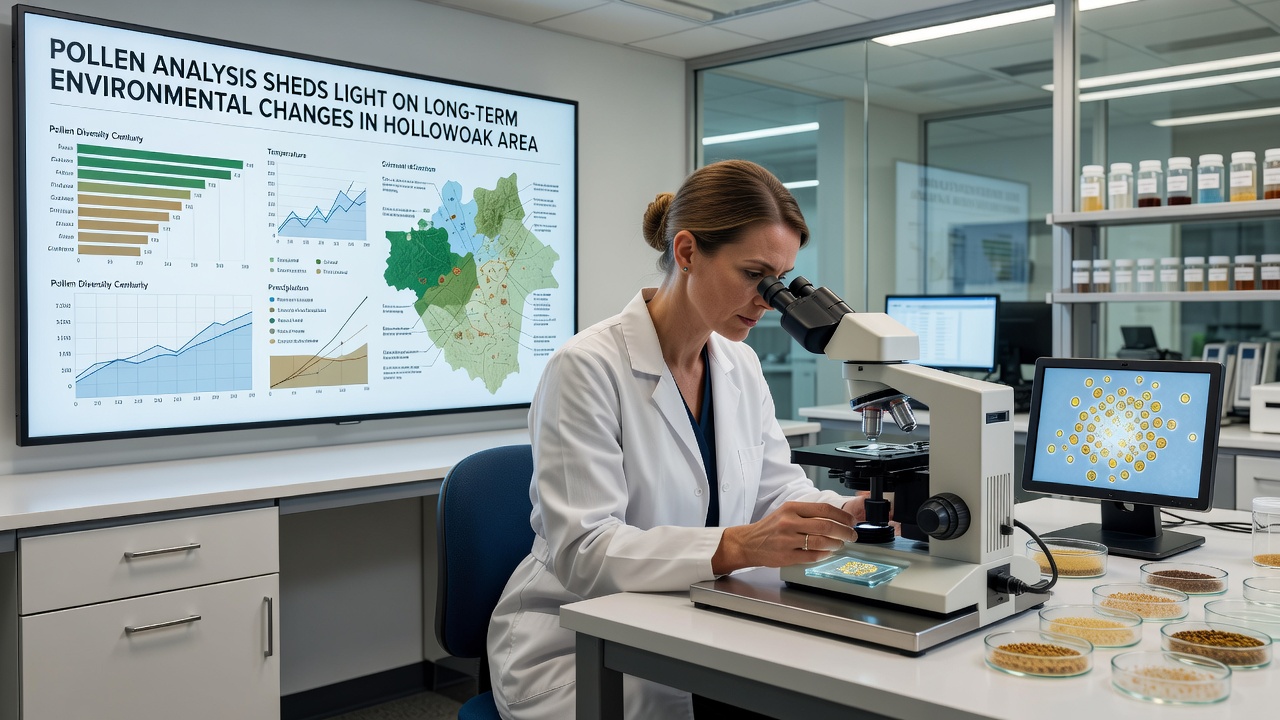
September 2026 brought additional context when updated core data were integrated with satellite imagery of current forest cover, highlighting how recent warming trends have begun to favor drought-resistant shrubs over traditional hardwood stands. Observers note that these combined datasets now extend the environmental timeline into the present, giving land managers a clearer baseline for restoration planning.
Integration with Regional Climate Data
Pollen records do not stand alone; researchers cross-reference them with tree-ring widths, charcoal layers indicating past fires, and isotopic measurements from the same cores. This multi-proxy strategy strengthens interpretations because each line of evidence responds differently to temperature, moisture, and disturbance. According to the US Environmental Protection Agency climate research summaries, such combined approaches have improved projections of future vegetation responses across similar temperate zones. At the same time, reports from Australia's Department of Climate Change, Energy, the Environment and Water demonstrate parallel methods applied to eucalyptus woodlands, underscoring how pollen analysis adapts across continents while maintaining consistent laboratory standards.
Applications for Land Management
Local authorities have begun incorporating pollen-derived vegetation histories into conservation plans that prioritize species once dominant in the Hollowoak grove. Maps generated from these analyses identify zones where oak regeneration faces the greatest challenges from invasive grasses, guiding targeted removal efforts. Monitoring programs now include periodic resampling of sediment traps to track ongoing changes, providing early indicators if current conditions deviate from historical ranges. Such tools prove especially useful when evaluating the success of prescribed burns or reforestation projects that aim to restore pre-settlement conditions.
Conclusion
Pollen analysis supplies a continuous record of environmental conditions that instrumental data alone cannot provide, and the Hollowoak findings illustrate how centuries of vegetation change connect directly to both natural climate cycles and human activity. Continued refinement of sampling and dating methods will likely extend these records further back while sharpening resolution for recent decades. The result is a factual framework that supports evidence-based decisions about preserving the area's ecological heritage.